Stylish Writing: The Handwritten Font That Adds Charm to Any Design
There’s something undeniably magnetic about a font that feels personal. In a world saturated with clean, geometric typefaces, a well-crafted script font like Stylish Writing offers a refreshing touch of humanity. It’s not just another decorative typeface; it’s a tool for storytelling, capable of transforming a simple layout into something warm, inviting, and memorable. For designers, entrepreneurs, and creators, understanding how to leverage such a font can be the key to building a more authentic connection with your audience.
More Than Just Letters: The Visual Personality of Stylish Writing
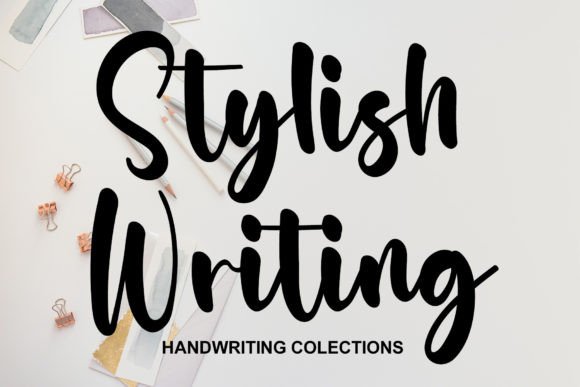
At first glance, Stylish Writing captivates with its fluid, graceful strokes. It strikes a delicate balance between elegance and approachability, avoiding the overly formal rigidity of some calligraphic scripts while steering clear of a casual, unfinished look. The letterforms exhibit a natural, handwritten rhythm, with subtle variations in weight and baseline that mimic the organic flow of ink on paper. This inherent whimsy makes it a creative font that injects joy and romantic allure into any project it graces.
What sets this premium font apart is its versatility in conveying tone. It can feel celebratory on a wedding invitation, intimate on a personal blog header, or sophisticated on boutique product packaging. Unlike a standard sans serif font that communicates neutrality, or a traditional serif font that often conveys formality, Stylish Writing communicates personality. It’s a display font that doesn’t just show words—it expresses emotion, making it a powerful asset for projects aiming to establish a distinct brand identity.
Strategic Applications: Where Stylish Writing Truly Shines
Knowing where to deploy a font is as crucial as selecting it. Stylish Writing excels in contexts where a human touch is desired, but it requires thoughtful application to maintain professionalism and readability. Its strengths lie in editorial design, packaging design, and logo design, particularly for brands in the lifestyle, beauty, artisanal, or wedding industries. Think of a boutique bakery’s logo, a skincare line’s labels, or the chapter headings in a memoir-style cookbook.
In the digital realm, it’s a standout choice for social media graphics, website hero sections, and email headers where you need to grab attention quickly. For bloggers and content creators, using it for pull quotes or article titles can break the monotony of body text and highlight key ideas. However, it’s generally not suited for long-form body copy on the web or in print, where a more neutral typeface ensures sustained readability. Pairing it wisely is essential.
Mastering the Mix: Font Pairing and Hierarchy
The true magic of a script font like this emerges in combination with other typefaces. A classic and effective strategy is to pair Stylish Writing with a clean, simple sans serif font. For example, use the script for a headline or a logo, and pair it with a sans serif like Montserrat or Lato for subheadings and body text. This creates a clear visual hierarchy: the handwritten element draws the eye and establishes tone, while the simpler font delivers information with clarity.
Another approach is to pair it with a complementary serif font for a more elegant, traditional feel—ideal for formal invitations or luxury branding. The key is contrast. You want the styles to differ enough that they don’t compete, but share a similar level of sophistication. Always test your pairings at various sizes to ensure the handwritten font remains legible when scaled down and that the overall composition feels balanced.
A Practical Guide to Evaluating and Implementing Stylish Writing
Before integrating any new design asset, a methodical evaluation is wise. Start by examining the font’s full character set. Does it include the glyphs, numerals, and punctuation you need? Check for stylistic alternates or ligatures—these can add valuable variation and prevent repetitive letter shapes in longer words. Review the licensing terms meticulously. Since Stylish Writing is a commercial font, ensure its license covers your intended use, whether for client work, merchandise, or digital products.
Conduct real-world tests. Mock up your intended application—a business card, a website banner, a product tag—to assess not just aesthetics but also readability. Does the font maintain its charm at small sizes? Is the spacing between letters (kerning) and words comfortable? Consider your audience. A playful, whimsical script might engage a younger demographic but could undermine the perceived seriousness of a financial advisor’s brand. Align the font’s personality with your brand’s core message.
Beyond the Aesthetics: Impact on Brand and Engagement
Typography is a silent ambassador for your brand. The consistent, strategic use of a font like Stylish Writing can significantly enhance brand perception and recognition. It signals attention to detail and a commitment to a crafted experience. For a small business owner, it can differentiate you from competitors using default system fonts, conveying a sense of care and creativity that resonates with customers.
In marketing materials, this creative font can boost audience engagement. A social media post with a heartfelt, handwritten quote is more likely to stop a scroll than one set in a standard typeface. In web design, using it for key calls-to-action or testimonial headers can make those elements feel more personal and trustworthy. Ultimately, it’s about using modern typography not just for decoration, but as a functional tool to guide the viewer’s eye, evoke the right emotion, and reinforce your message at every touchpoint.
Choosing a font like Stylish Writing is a decision to infuse your work with character. It’s an acknowledgment that in our digital age, the warmth of the human hand still holds profound appeal. By applying it thoughtfully—respecting its strengths, pairing it intelligently, and testing it rigorously—you can harness its delightful charm to create designs that don’t just look beautiful, but feel genuinely connected.